
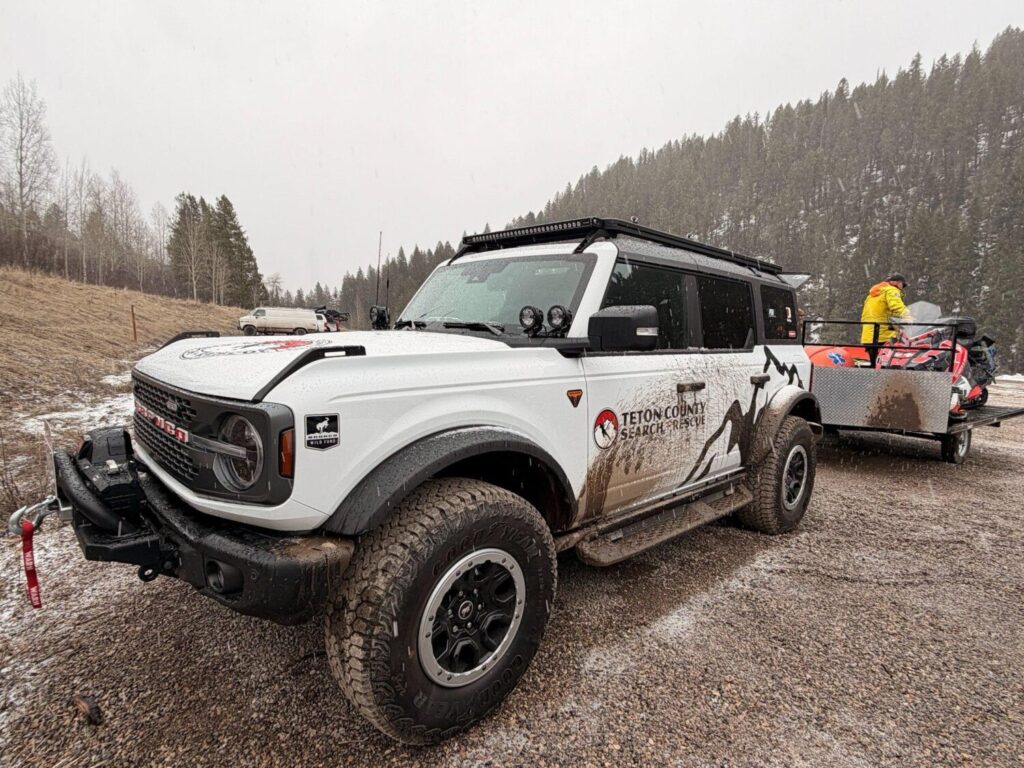
Four rescuers. Four packs. A wheeled litter. For Teton County Search and Rescue, the right vehicle gets the team and its equipment to the end of the road, where the next stretch of the rescue begins on foot.
At a glance
46 volunteers
More than 150 missions in 2025
4,216 square miles
Approximately 97% public land
Jackson, Wyoming
Serving under the Sheriff’s Office since 1993
A vast landscape. A practical mission.
Teton County’s all-volunteer rescue team responds to injured hikers, horse wrecks, ATV and mountain bike crashes, hurt hunters, and falls requiring rope work. Its territory includes Grand Teton, the Bridger-Teton National Forest, Yellowstone, and the National Elk Refuge. The team does not charge for rescue.
Getting to a patient often starts on a Forest Service road or a tight two-track. A full-size pickup can be difficult to maneuver, and the drive may still leave rescuers miles from the person who needs help. County radio coverage also has gaps.
“Sometimes we have to go five, six miles to get to somebody.”
Doug Vanhouten, Teton County Search and Rescue
Built around the rescue crew
Ford’s Bronco Wild Fund donated the Ford Bronco, and Darley and Public Safety Direct completed the build. The team’s priority was straightforward: carry four rescuers, their packs, and a wheeled litter to the road’s end. Vehicle-based command and control was not the focus; rescuers spend their time in the field helping patients.
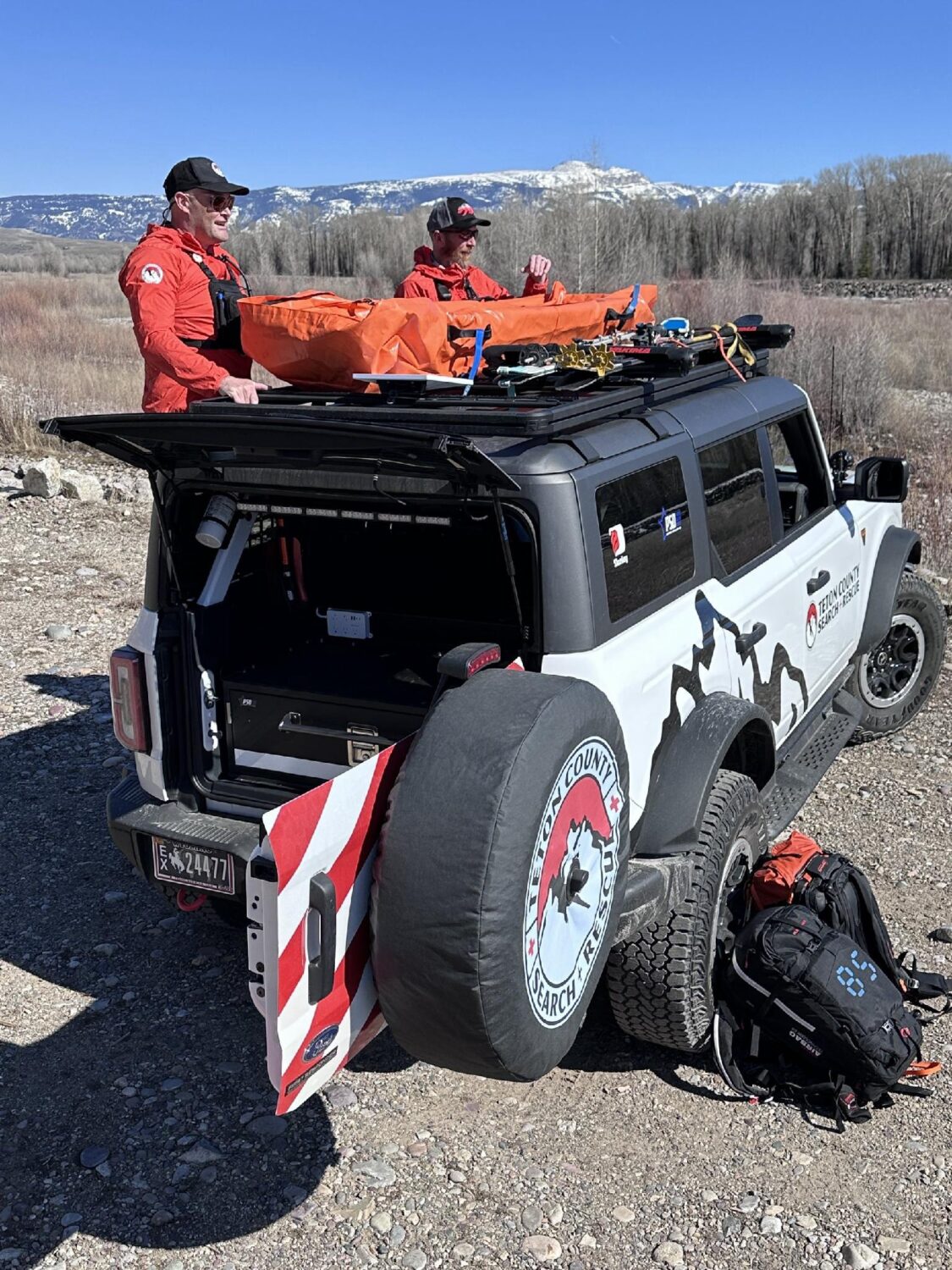
Room for people and equipment
The litter travels on the roof, loaded and ready. In winter, skis take its place. A cargo box and a dedicated recovery-gear drawer support the crew’s daily needs, while a pickup can follow with a trailer for heavier equipment.
Access on tighter roads
“The Bronco is way shorter. Get into tighter spots than we can with that full size pickup truck.”
Michael Estes, Teton County Search and Rescue
A communications path beyond radio coverage
The team-supplied Motorola APX 8500 can carry radio traffic over Wi-Fi. Paired with Starlink Mini, it gives the vehicle a communications path where the county radio network has dead spots.
“We have a couple dead spots. That’s going to be our communication tool, is that vehicle.”
Doug Vanhouten, Teton County Search and Rescue
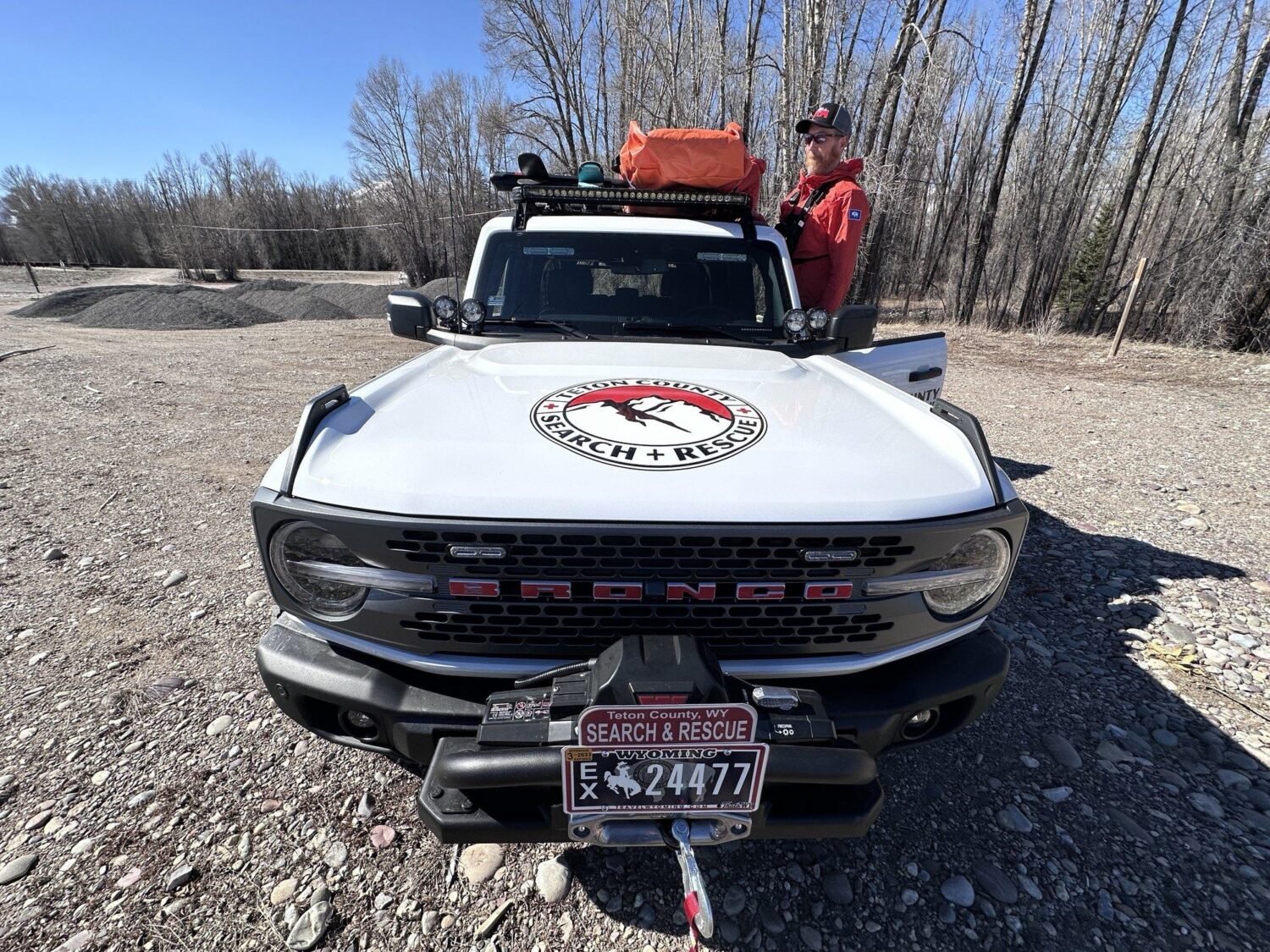
Equipment selected for the job
- Starlink Mini and a team-supplied Motorola APX 8500
- 100Ah auxiliary battery, 1,000W inverter, and shore power plug
- Roof rack, cargo box, and recovery-gear storage
- Winch and concealed emergency lighting in a slick-top configuration
The result is a vehicle configured around the team’s actual work: transporting rescuers and equipment, reaching tighter locations, and supporting communications in coverage gaps.
See the complete case study
Download the two-page PDF for the full story and build details.


