Industrial Fire Chief, Virginia Beach Captain, and an Australian firefighter show how AI can catch risk before a firefighter gets hurt.
“The best place to make firefighters safer is before the tones drop.” – Second-place winner Captain Daniel Fernandez, Virginia Beach Fire Department
Darley and the National Fallen Firefighters Foundation (NFFF) today named the winners of the fifth annual Fire Service Thought Leadership Essay Competition, which drew over 40 essays from five countries: the United States, Canada, Australia, England, and Israel. This year’s question: How can artificial intelligence improve firefighter health, wellness, and safety?
The three winning essays reach the same conclusion from different directions. The fire service already holds most of the information it needs to protect its people. What it lacks is a practical way to use that information before someone gets hurt.
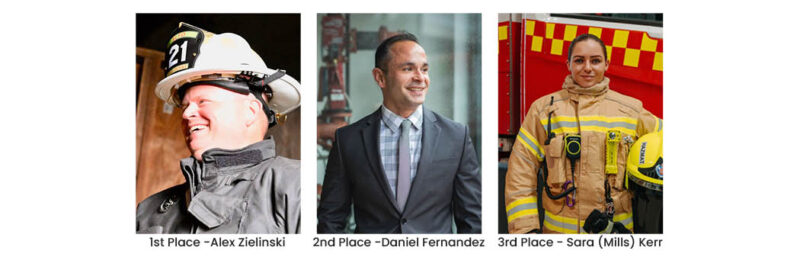
First Place: Alex Zielinski
$3,000 – Alex Zielinski, Fire Chief, Eli Lilly Fire Department, Houston, Texas
Zielinski, who previously served as deputy chief and division chief of training for Lilly in Lebanon, Indiana, proposes a Firefighter Health Risk Intelligence System. It would read the records a department already keeps, including incident reports, training logs, near-miss reports, and PPE compliance, against the full library of NIOSH firefighter fatality investigations, then hand back specific findings and a ranked list of where to start. No new data collection, no analyst required.
“The gap between knowing and acting is no longer a technology limitation. It is a priority limitation,” he writes.
Second Place: Captain Daniel Fernandez
$2,000 – Capt. Daniel Fernandez, Virginia Beach Fire Department
Fernandez calls for an AI “safety layer” built on data departments already collect, from rehab vitals to staffing patterns. He has built part of it himself. Stuck at a slow station with few chances to hear officers run a fire, he used AI to create a voice-driven command simulator that runs on a computer or tablet. Now called Fire Ground Sim, it is used by more than 400 firefighters.
Third Place: Sara (Mills) Kerr
$1,000 – Sara (Mills) Kerr, Fire and Rescue NSW, Australia
Kerr, a qualified firefighter and communications operator who is also a doctoral candidate at the University of Newcastle, takes on cognitive overload. She proposes an AI assistant bound only to an agency’s own pre-incident plans, SOPs, and hazmat references, running on crews’ existing tablets even when the internet drops. It would flag hydrants, hazardous materials, and building risks before the first unit arrives. The decisions stay with people.
“AI appears to know everything, yet it thinks about nothing,” she writes.
Where the Essays Came From
Essays came from the United States, Canada, Australia, England, and Israel, from members of career, volunteer, and industrial fire departments. Writers ranged from line firefighters and company officers to chiefs, training officers, researchers, and educators.
Across the field, three ideas kept coming up: the data already exists but sits in separate systems or on paper; the goal is catching risk before an injury, with many writers pointing to the NFL’s Digital Athlete program as a model; and AI should back up firefighter judgment, never replace it, with privacy built in from the start.
“These essays came from people who live with the problem every shift. That’s exactly why we asked them. Several of these ideas could be tested in a firehouse next month, not five years from now,” said Paul Darley, CEO & Chairman of Darley.
“Everyone Goes Home has always been about preventing the next line-of-duty death before it happens. These firefighters showed how new tools can serve that mission without taking judgment out of human hands,” said Danny Kistner, Director of Fire Programs at the National Fallen Firefighters Foundation.
What’s Next
Winners will be featured on Inside Darley, the Darley Times newsletter, and the InService podcast, and in fire service publications including Fire Engineering, Firehouse, FireRescue1, and CRACKYL. The first-place winner will present at the TEEX Leadership Development Symposium, Jan. 6–8, 2027, in The Woodlands, Texas, and at Fire-Rescue International (FRI).
The winning essays will be published in the 2026 Top Essays Booklet, available in mid-November at Darley’s Essay Competition page. The 2027 prompt will be released before the end of 2026.
The competition was conceived by Garry Briese and is sponsored by Darley in collaboration with the National Fallen Firefighters Foundation
About the National Fallen Firefighters Foundation
The National Fallen Firefighters Foundation (NFFF) was created by Congress in 1992 to honor and remember America’s fallen firefighters, assist their families, and support programs that improve firefighter safety and prevent line-of-duty deaths. For more information, visit FireHero.org.